Merchandising
A four-foot derm bay: how to plan a pharmacy skincare set
Facings, price ladders and the twelve SKUs that should never go out of stock in an independent pharmacy — built from what the prescription pad already tells you.
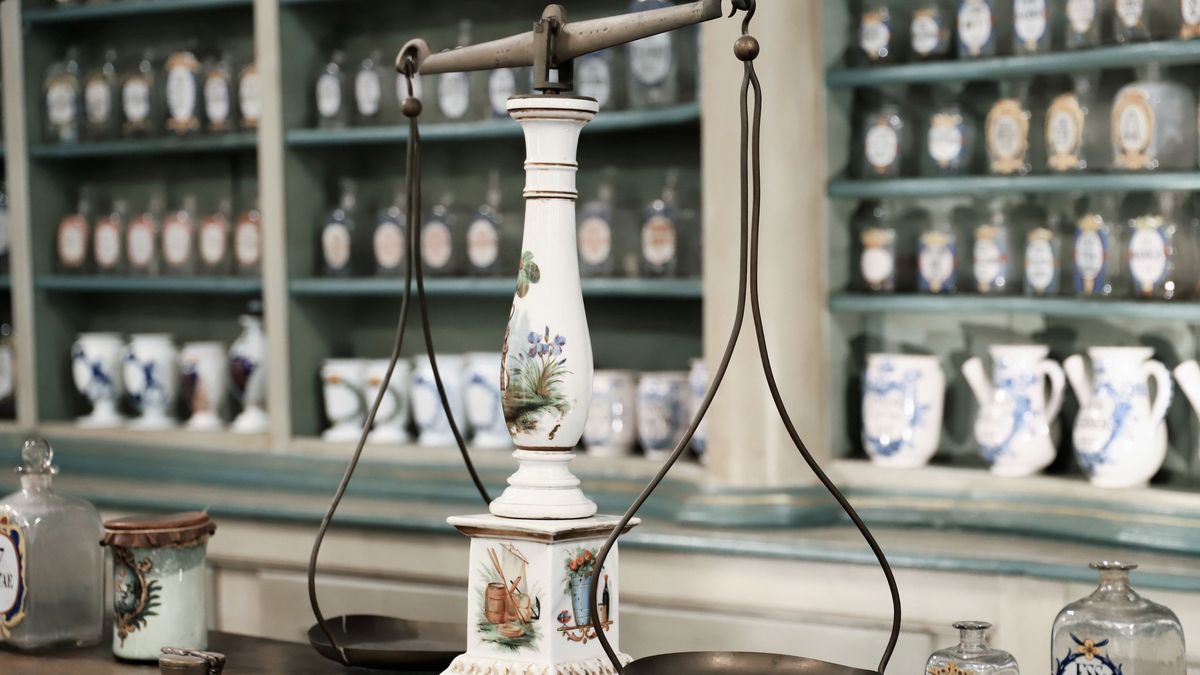
An independent pharmacy has one advantage over every chain in its market: the person behind the counter already knows what the local dermatologists prescribe. Most independents throw that advantage away by buying a skincare set the same way they buy greeting cards — a bit of everything, three facings each, refreshed when it looks tired.
A derm bay planned around the prescription pad outsells a general beauty set by a wide margin, and it does it on a narrower range.
Start from what gets recommended, not from what is new
Ask your pharmacists which products come up in conversation after a prescription. In most Michigan practices the same answers repeat: a gentle non-foaming cleanser, a ceramide moisturizer, a thick occlusive ointment, a fragrance-free body lotion, and a mineral SPF for patients on retinoids or after a procedure. That is five jobs, not five hundred products.
Fill each job with two options — a mainstream one and a dermatologist-facing one — and you have your spine. Everything else on the bay is incremental.
The space maths
A standard four-foot bay gives you four or five shelves at 48 inches. Call it 190 linear inches of usable facing. A 250 ml pump bottle is about 2.5 inches wide, a 16 oz lotion around 3.5 inches. That is roughly 60 facings if you use every inch, which in practice means 30–35 SKUs at two facings and a handful of hero products at three or four.
| Shelf | Job | Share of bay |
|---|---|---|
| Top | Actives and treatment serums — low volume, high ticket, at eye level for browsing | 15% |
| Second | Facial moisturizers and barrier creams — the highest-margin repeat purchase | 30% |
| Third | Cleansers and micellar — the highest-turn line on the bay | 25% |
| Fourth | Sun care, seasonal, and acne — expands March to August, contracts after | 20% |
| Bottom | Body, hand and large-format lotion — heavy, bulky, low-decision | 10% |
Two structural rules do most of the work here. Put the highest-velocity line — cleansers — at the third shelf where a standing adult's hand naturally falls. And keep bulky 16 oz and 19 oz body lotion on the bottom, where weight belongs and where it does not eat eye-level space it cannot pay for.
Build a price ladder, then hold it
Customers at a pharmacy shelf are not comparing formulas. They are comparing a cheap option, a normal option and a good option. Give them exactly that at each job:
- Entry, $6.99–$9.99. Simple, St. Ives, Clean & Clear. This is your traffic tier — it converts browsers and teenagers.
- Core, $12.99–$18.99. Cetaphil, CeraVe, Aveeno, NIVEA. Most of your units and most of your gross profit live here.
- Recommended, $19.99–$34.99. La Roche-Posay, Eucerin, Vanicream, Bioderma. This is the tier your pharmacist's recommendation moves, and where the ticket justifies the shelf space.
If a tier has one product in it, it is not a tier — it is a price the customer cannot judge. Two or three options per tier is enough for a comparison and few enough to hold in stock.
A shopper does not need forty choices. They need three they can tell apart and one person who can say which.
The twelve that should never be out of stock
Every bay has a short list where an out-of-stock does not move the sale to another product — it moves the customer to another store. In a derm-led pharmacy set that list is roughly:
- Gentle non-foaming facial cleanser, mid size
- Ceramide facial moisturizer, jar
- Ceramide moisturizing lotion, 12–16 oz pump
- Fragrance-free body wash for sensitive skin
- Healing ointment, tube
- Thick barrier cream for hands, tube
- Mineral SPF 50 face, 3 oz
- Broad-spectrum SPF 50 body lotion
- Micellar water, large format
- Benzoyl peroxide or salicylic acid acne wash
- Fragrance-free daily face lotion with SPF
- Lip balm, counter tier
Twelve SKUs is a small enough list to check every Monday morning and important enough that it should be checked every Monday morning. Set a min/max on each and reorder against it rather than against a feeling. Our $150 reorder minimum was set deliberately low so that a top-up on eight or ten of these is a normal weekly order, not a special event.
Facings by velocity, not by vendor
Give three or four facings to anything selling more than five units a week and one to anything under two. Review it quarterly with real numbers. The most common merchandising error in an independent pharmacy is a full shelf of a product that sold nine units last year because the rep who placed it was persuasive.
Adjacencies worth getting right
- Put barrier creams and healing ointments next to the pharmacy counter, not at the end of the aisle — that is where the recommendation happens.
- Keep sun care as a single visible block from March, not scattered by brand. Sun care is bought by claim (SPF number, mineral, kids) and not by brand.
- Hold lip balm and hand cream at the till from October. They are impulse merchandise and they carry the winter basket.
Refresh cadence
Reset the bay twice a year — once in late February before sun care builds, once in September as body care and lip take over. In between, change facings and price points, not the whole plan. A set that is re-planned every quarter never gets a clean read on what actually sells.
If you want a starting point rather than a blank shelf, ask us for a bay plan when you request the pricelist. We build them for accounts on request, sized to the shelf you actually have.
Key takeaways
- Plan the bay around five jobs — cleanse, moisturize, repair barrier, treat, protect from sun — not around brands.
- A four-foot bay realistically holds 30–35 SKUs at two facings; put the highest-turn line at the third shelf.
- Run three visible price tiers per job: $6.99–$9.99, $12.99–$18.99 and $19.99–$34.99.
- Keep a twelve-SKU never-out list and check it against min/max every Monday.
- Reset the bay twice a year — late February and September — and change only facings in between.
Keep reading

SPF season in the Midwest: order in February, sell in June
Sun care is the most punishing category to buy late. A month-by-month build that keeps you off allocation and out of markdown.
Cleanser, moisturizer, barrier: what counter staff should be able to answer
Nine questions customers actually ask at the shelf, with answers a part-time clerk can give without practising medicine.